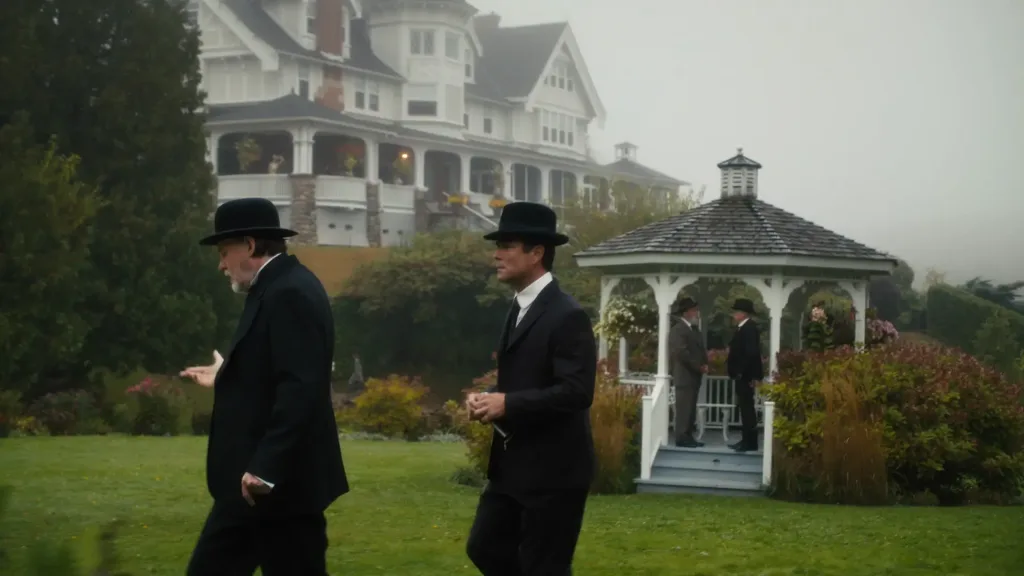
S18 E9 – When Rubber Meets the Road
For the Good of the Plot
Spoiler Warning: Do not read on if you haven't watched this episode!!
It was bound to happen at some point: after going from strength to strength this season, the latest episode of Murdoch Mysteries, titled When Rubber Meets the Road, can only be described as passable. Following a standout episode last week, this installment feels like a bit of a letdown. It lacks the typical Murdoch spark, resulting in a narrative that struggles to engage.
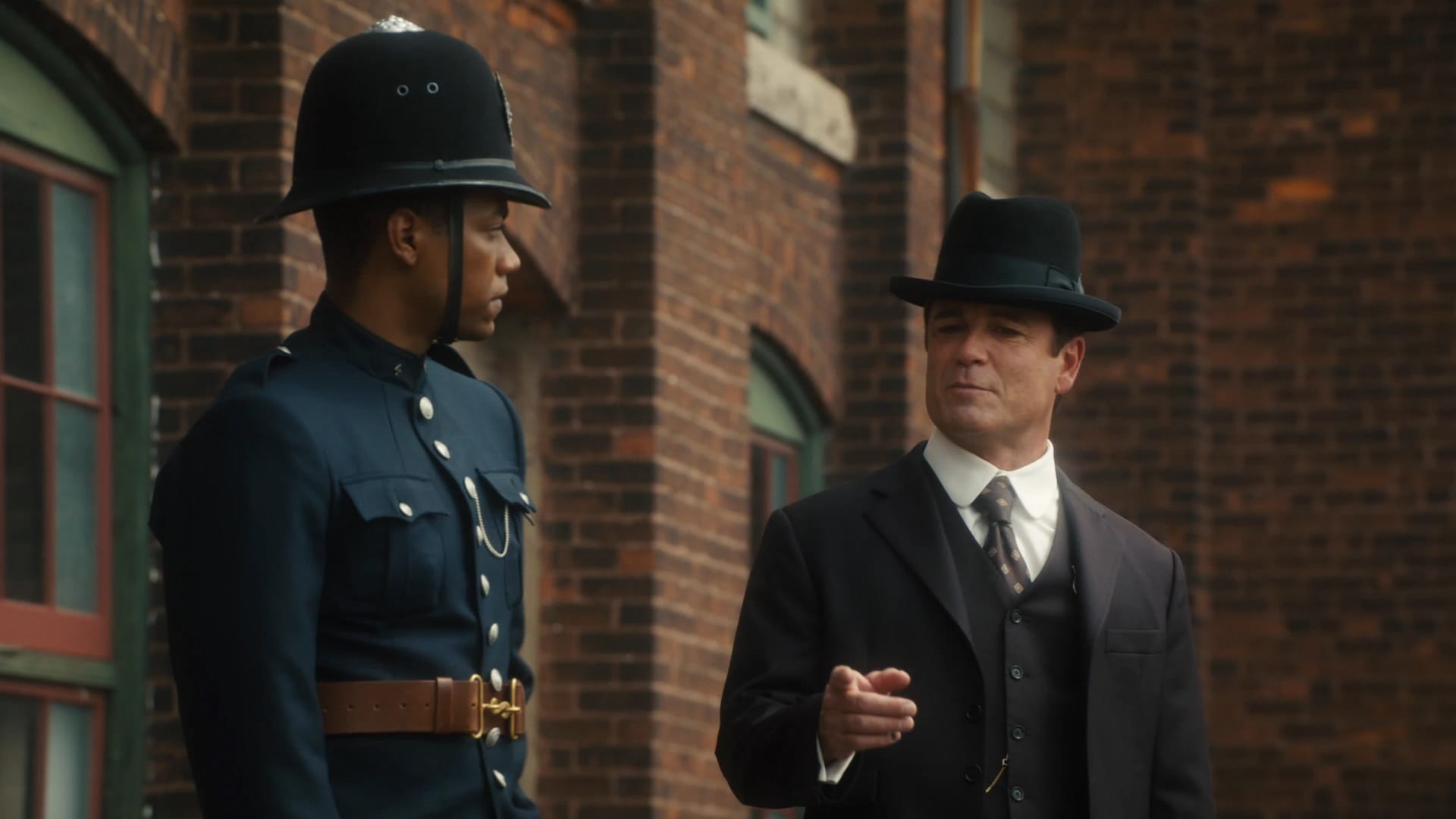
The premise of the story certainly holds promise. When a strike leader at a rubber factory is murdered, Detective Watts (Daniel Maslany) goes undercover while Detective Murdoch (Yannick Bisson) leads the investigation with the help of newly hired Constable Roberts (Kataem O’Connor). There’s a motley crew of characters—capitalist factory owners, overworked and underpaid strikers, scabs who must be strikebreakers to put food on the table for their families, desperate factory customers, and the press—providing plenty of potential motives for murder and avenues for investigation. However, a story premise is just that: the concept of a narrative. It should merely serve as the foundation for the story, not be the full narrative. We have seen strikes and undercover investigations before in Murdoch Mysteries. I don’t mind that at all, as long as the writers do something new with it. Unfortunately, this episode never strays from the beaten path.
Missed Opportunity
Murdoch Mysteries has a long history of its protagonists going undercover. More often than not, this approach works because we learn something new about our heroes, or it significantly furthers the plot and adds suspense, or it is simply very funny. Knowing that Watts’s sympathies lie squarely with exploited workers, it seems like a missed opportunity to have him go undercover in a factory where a strike is happening and then not do anything substantial with it. The only nod we get about his misgivings is Inspector Choi (Paul Sun-Hyung Lee) saying, I understand how you feel. But remember, you’re pursuing justice for the man that started that picket line.
Everyone’s sympathy is squarely with the picketers. From a dramatic point of view, however, it would have been better if at least one of the main characters had some contrary views. Inspector Choi ‘s mention that Chief Constable Brackenreid was hoping to intimidate the men back to work doesn’t really count in that respect. Even Miss Cherry (Bea Santos) is on the side of the strikers. She’s usually supportive of the underdog, so there’s no surprise there. Like Watts, though, her character is underused. She mainly serves as a plot device here, with her daily coverage of the strike providing Murdoch with the photographs that help crack the case. Still, Miss Cherry does get some of the sassiest lines; dialogue is not one of the issues in this episode.
Running Out of Time?
Perhaps not surprising in a season of 22 episodes—though rarely noticeable in Murdoch Mysteries—the production of When Rubber Meets the Road seems to have somewhat run out of time. It feels a bit rushed, as if the script wasn’t quite finished before they started filming. The show is usually pretty good with continuity, but now there are small inconsistencies popping up left and right – mostly bicycle-related, it seems. Murdoch is now apparently a poor judge of character; he hasn’t had time to ride or tune-up his bicycle even though only last week he was riding it with Roberts and wouldn’t let anyone else touch it anyway; and he doesn’t notice right away that his new tires aren’t new at all? Sorry, I’m just not buying that. It’s not just the writing, either. There are a couple of editing mistakes (notably, two extras walking in the same direction twice in a row in the same scene and a camera man caught on camera), and the factory set dressing wasn’t very impressive; it certainly didn’t scream ‘bad working conditions’.
Best Parts
Overall, this episode doesn’t meet the show’s usual standards, but that’s not to say there weren’t any highlights. As noted before, the dialogue is quite good, and Yannick Bisson and Daniel Maslany are always worth watching. The guest actors made the most of their roles, and I appreciated Roberts being critical of Choi, only to be subtly rebuked by Murdoch. I loved how Murdoch couldn’t wait to take the case. The opening scene with Roberts falling off his bike was funny, and Murdoch skidding his bike was a cool moment. In fact, that entire chase scene was pretty neat, as was the brawl. Finally, the introduction of Lucy Hill as Toronto’s first female Morality Officer certainly promises interesting developments in future episodes.
To be honest, writing these reviews is basically just an excuse to rewatch an episode. Usually, I can’t wait to do so, but this time it felt a bit more like a chore. Not that the episode wasn’t entertaining; it made for a nice enough hour, but it lacked that special something that makes most Murdoch Mysteries episodes worth rewatching. I’m afraid that When Rubber Meets the Road won’t go down in history as a particularly unforgettable episode.
Bits and Bobs
This Episode's Hat: