S20 E2 – Arcana Dei
Henceforth known as the Da Vinci Code episode
Spoiler Warning: Do not read on if you haven't watched this episode!!
The second episode of Murdoch Mysteries season 20, Arcana Dei, is heavily Dan Brown (or better still, Da Vinci?) coded, and I’m very much here for it. The episode is a direct homage to Brown’s The Da Vinci Code, mirroring its theological thriller plot, cryptic puzzles, and secret societies. I thoroughly enjoyed decoding all its references, easter eggs, and subtext.
The Murdoch Mysteries writers room always seems to excel when adapting famous works of fiction. Much like last season’s brilliant adaptation of Face/Off, this episode delivers a condensed, period-accurate version of a beloved modern thriller. In this installment, writer Noelle Girard stays incredibly close to the source material, throwing Detective Murdoch (Yannick Bisson) straight into a high-stakes conspiracy involving the last living descendant of Jesus Christ and Mary Magdalene. A hardline Catholic faction desperately tries to eliminate or control the holy bloodline to protect traditional Church authority, while a secret fraternity works in the shadows to guard the descendant and keep the genealogy scroll safe at all costs.
Move over, Robert Langdon
Despite closely matching the narrative beats, Girard still manages to make this a very Murdoch episode. Aided by veteran director Laurie Lynd and filmed at the Gothic Revival-style La Salette Church in Norfolk County, she inserts the main characters into the plot in a way that is both true to their established personalities and helps advance the story. Murdoch could certainly give Robert Langdon a run for his money when it comes to esoteric knowledge and code-cracking skills. His Catholicism makes for a natural connection to the storyline, with his son, Harry (Etienne Kellici), attending a Catholic school, and Murdoch having old friends in the Church like Father Matthew (Tom Barnett).
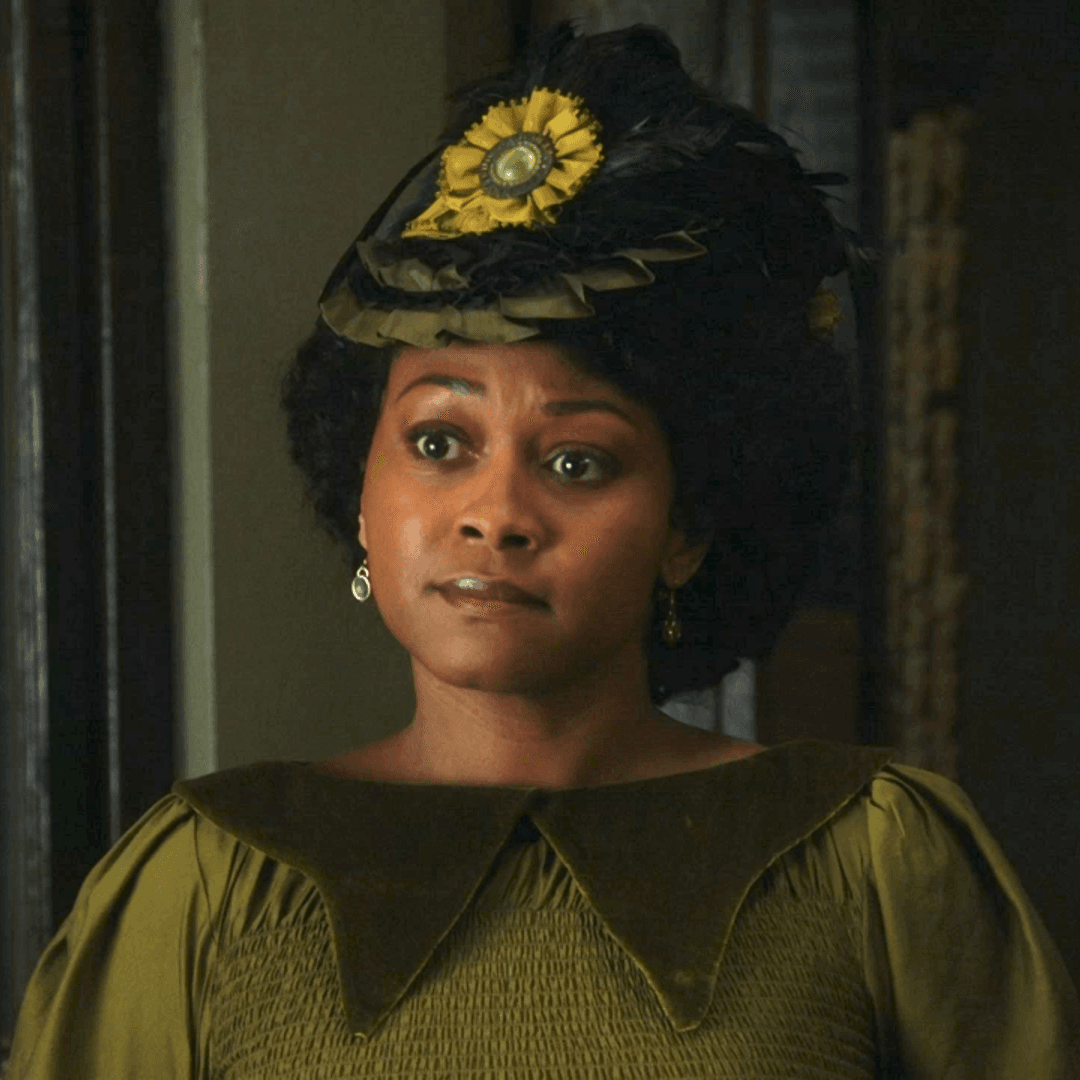
Meanwhile, Violet Hart (Shanice Banton) shows her badass side as well as her funny side: Perhaps we’re looking for someone who doesn’t discharge their firearm very often. – Who then shot three people? Is he making up for lost time? Thomas Brackenreid (Thomas Craig) is his usual irreverent self – You think the three priests were planning a heist on some saint’s toenail? – and is in charge of this week’s I can’t see it catching on running gag, dismissing the word-cross puzzle from New York (which delighted this avid player of the NYT Crossword). Even characters who aren’t in this episode are conjured up in spirit: I for one cannot see anyone eat a pretzel without thinking of Detective Watts. The only thing I’m of two minds about is Inspector Choi’s (Paul Sun-Hyung Lee) revelation that he too is a Catholic. I can see how this could open up potential storylines, but I wouldn’t want him to turn into another Murdoch.
Decoding Murdoch
Most of my enjoyment came from the parallels with The Da Vinci Code and the subtle clues hidden in the episode. I’m sure I missed a lot of them, but here are a few tidbits I had fun discovering:
- Verus Dei (meaning ‘of the true God’) in Murdoch mirrors Opus Dei (‘work of God’) in Da Vinci. While Verus Dei is made up, Opus Dei actually does exist (although not in the shape of Dan Brown’s secretive, murderous cabal). Father Matthew seems to be The Teacher’s Canadian cousin.
- Arcana Dei is a Latin phrase that translates to ‘The Secrets of God’ or ‘The Mysteries of God.’ It is famously part of a longer phrase, I Tego Arcana Dei (‘Begone! I conceal the secrets of God’), a perfect anagram of Et in Arcadia ego (Even in Arcadia, I [Death] am). That is the inscription on the tomb in Nicolas Poussin’s mysterious painting The Arcadian Shepherds, which alternative theorists became convinced was a map or a riddle, as Poussin was known for embedding complex geometry and philosophical themes in his work. The anagram gained widespread fame through the 1982 book The Holy Blood and the Holy Grail, which later heavily inspired Dan Brown’s The Da Vinci Code.
- According to The Holy Blood and the Holy Grail, in the late 19th century, a real-life French priest named Bérenger Saunière discovered mysterious parchment codes hidden inside a pillar at his church in the small village of Rennes-le-Château – the same village where the Murdoch episode says the Holy Thorn reliquary was placed.
- Nomen est omen: Celeste Riveaux’s (Madison Baines) first name translates to ‘heavenly’ or ‘celestial’.
- Part of Harry’s punishment for missing Mass and Confession is translating Tertullian. Tertullian (c. 155 – c. 220 AD) wrote anti-heretical treatises designed to delegitimize and bury Gnostic texts (like the alternative stories about Mary Magdalene’s prominent leadership role) to establish a strict, singular orthodox narrative for the Church.
- Just like Sophie Neveu in The Da Vinci Code chooses to step away from the grand revelation to live her life, Celeste rejects the idea of being revered or put in a case like a relic. She chooses to live quietly and anonymously.
Ultimately, Arcana Dei proves Murdoch Mysteries still knows how to deliver a stellar event episode twenty seasons in. While condensing a massive, Da Vinci Code-style conspiracy into a single episode (where, like in all of Dan Brown’s work, it’s best not to look too closely at some of the plot points and pseudo-historical facts), the sheer joy of decoding its hidden layers makes it an absolute standout. It beautifully honors its source material while remaining completely anchored in the character dynamics and turn-of-the-century charm we love. By pairing a massive theological thriller with genuine historical lore and the show’s signature wit, Noelle Girard and Laurie Lynd deliver an episode that is as intellectually stimulating as it is thoroughly entertaining. For an avid fan who loves hunting for easter eggs, this episode was a gift.
Bits and Bobs
This Episode's Hat: